
EA Booking · Ethiopia travel
Ethiopia tours: Lalibela, Gondar and where to stay
Plan the route first, then choose the base that fits your dates, budget and the latest travel advice.

If you are comparing Ethiopia tours, start with the route, not the hotel list. Lalibela, Gondar and Bahir Dar are the northern stops most readers mean, but current advice matters before any booking.
This guide covers the route options, the facts that shape a trip to Ethiopia, and how to compare stays. For city hotels, see our guide to hotels in Addis Ababa. You can also browse all travel guides, read the travel blog, or learn how EA Booking works.
Historic stop comparison for route planning
| Stop | Main reason to go | Best use | Current planning note |
|---|---|---|---|
| Lalibela | Rock-Hewn Churches, Lalibela and pilgrimage interest | Core historic base if access suits your dates | Check current travel advice before booking any overnight |
| Gondar | Fasil Ghebbi and palace history | City base for a heritage focused trip | Confirm route access and stay terms on your dates |
| Bahir Dar | Lake Tana and monastery interest | Good for a lake-oriented overnight | Use it as a separate stop, not a guaranteed circuit |
| Addis Ababa | Arrival and departure logistics | First or last night in the country | Useful while you confirm the rest of the route |
Use this to compare the main interests on a northern Ethiopia trip. It is a planning view, not a live availability table.
Check current travel advice before you plan the route
Start here if you are comparing Ethiopia tours with a Lalibela or Gondar focus. FCDO advises against all travel to Amhara region as of 1 October 2026, which matters because Lalibela, Gondar and Bahir Dar sit inside the northern route many readers mean when they search this trip. That advice is UK government guidance rather than a universal entry rule, but it is still the first check before you commit to hotels, transport or a wider circuit. If the route does not suit your dates, Addis Ababa is the more flexible planning base.
FCDO's advice also covers other parts of the country, including Tigray and Gambela, and some border areas, so check the whole route and not just the stops you know by name. That caution does not erase the cultural importance of the places themselves. UNESCO describes Lalibela as 11 medieval rock-hewn churches and lists Fasil Ghebbi in Gondar Region among Ethiopia's World Heritage properties. Use the current FCDO Ethiopia travel advice alongside UNESCO's Rock-Hewn Churches, Lalibela page and UNESCO's Ethiopia World Heritage page before you decide whether this route fits your dates.
What Lalibela, Gondar and Bahir Dar are for
Lalibela is the most specific stop on this route. UNESCO describes it as the home of 11 medieval rock-hewn churches, still a place of pilgrimage and devotion, on its official World Heritage page. That makes it a strong choice if your trip is built around heritage rather than shopping or nightlife. Gondar has a different feel. Its appeal is royal history, so it works better if you want palace and fortress context in the same country trip. Bahir Dar fits a Lake Tana plan around water, monastery visits and a slower overnight.
In practice, people use these places in different ways. Some travelers sleep in Addis Ababa first, then decide whether to continue north. Others want one historic base only. If you are weighing a city stay against a route stay, our Addis Ababa hotels guide covers the city entry angle.
The northern stops in more detail
| Stop | Key facts | What to expect on the ground |
|---|---|---|
| Lalibela | Inscribed by UNESCO in 1978. Eleven churches carved from solid rock in medieval times, with the cross-shaped Biete Giyorgis the best known. The town sits at roughly 2,500 metres. | The churches are active places of worship, so visitors remove their shoes and dress modestly. Paths are uneven and include steps, so comfortable footwear matters. |
| Gondar | Fasil Ghebbi, the royal compound, was inscribed by UNESCO in 1979. Emperor Fasilides founded the city in the 17th century. | A walkable compound of castles and halls, and a good fit for a half day of history on a heritage focused trip. |
| Bahir Dar | On the shore of Lake Tana, Ethiopia's largest lake and the source of the Blue Nile. Monasteries stand on islands and peninsulas, and some date back to the medieval period. | Boat trips to the monasteries are the main draw. The Blue Nile Falls, outside town, vary a great deal with the season and with upstream water use. |
Elevations are approximate. UNESCO inscription years come from the World Heritage List.
Ethiopia at a glance
A few basics make planning easier, especially if this is your first trip to the Horn of Africa.
| Topic | Detail |
|---|---|
| Capital | Addis Ababa, which also hosts the headquarters of the African Union |
| Population | More than 120 million, which makes Ethiopia the second most populous country in Africa after Nigeria |
| Languages | Amharic is the federal working language. Oromo, Tigrinya, Somali and more than 80 other languages are spoken, and English is common in hotels and tourism |
| Currency | Ethiopian birr (ETB) |
| Time zone | East Africa Time (UTC+3), with no daylight saving |
| Electricity | 220V, with European style plugs (types C, E and F) in common use |
| Entry | Most visitors need a visa, and an online e-visa is available. Ethiopia is not part of the East Africa Tourist Visa, which covers Kenya, Rwanda and Uganda, so read our East Africa tourist visa guide and confirm requirements with the official Ethiopian immigration service before you travel |
| Health | A yellow fever certificate is required if you arrive from a country with yellow fever risk. Malaria risk varies by altitude and region, so ask a travel health clinic. Much of the country is high, so allow time to adjust |
Ethiopia runs on its own calendar and clock
Ethiopia is one of the few countries that still uses its own calendar for daily life. It matters for festivals, for reading local schedules and for the odd moment when a sign shows a year that looks wrong.
| Feature | How it works |
|---|---|
| Months | Thirteen: twelve months of 30 days, plus a short month of five days (six in a leap year) |
| Year | Seven or eight years behind the Gregorian calendar. The new year, Enkutatash, falls on 11 September in most years and 12 September in some |
| Daily clock | Traditional Ethiopian time counts from sunrise, so 7am on a standard clock is "1 o'clock". Tour operators and hotels usually quote international time, but confirm which one is meant when you book a pick-up |
Landscape and altitude
Ethiopia is a country of high plateaus and deep rifts. Its highest point, Ras Dejen in the Simien Mountains, rises to about 4,550 metres, while the Danakil Depression in the northeast drops to roughly 125 metres below sea level. Most routes that visitors take sit on the highlands in between, which keeps days warm and nights cool.
| Place | Approx. elevation | What it means for your trip |
|---|---|---|
| Addis Ababa | 2,355 m | One of the highest capitals in the world. Take the first day gently |
| Lalibela | 2,500 m | Cool mornings and evenings, and steep paths between churches |
| Gondar | 2,100 m | Mild days, and a compound that is easy to walk |
| Harar | 1,850 m | Warmer than the capital, with a walled old town best explored on foot |
| Bahir Dar | 1,800 m | The lowest of the northern stops, and noticeably warmer |
Festivals and the best time to go
Ethiopian Orthodox Christianity dates back to the fourth century, when it reached the kingdom of Aksum, and church festivals still shape the travel calendar. The main ones follow the Ethiopian calendar, so Gregorian dates can shift by a day. Rooms in pilgrimage towns tend to be in demand around these dates, so settle your route early.
| Festival | Usual date | What it is |
|---|---|---|
| Enkutatash | 11 September (12 in some years) | Ethiopian New Year, celebrated at the end of the rains |
| Meskel | Around 27 September | Marks the finding of the True Cross, with bonfires and processions |
| Genna | 7 January | Ethiopian Orthodox Christmas |
| Timkat | 19 January (20 in some years) | Epiphany, with processions of replica tablets and a ritual blessing of water |
| Fasika | Varies with the Orthodox calendar | Ethiopian Orthodox Easter, after a long fast |
Outside festivals, the weather decides the best time to go.
| Months | Conditions | Planning note |
|---|---|---|
| June to September | Main rainy season in much of the highlands | Landscapes are green but roads and trails can be wet, and cloud can hide views |
| October to November | Rains ease | Fresh, green scenery and clearing skies, which many travelers find ideal |
| December to February | Dry and sunny, with cool nights | Reliable weather and the Genna and Timkat festivals |
| March to May | Hotter and drier, with some short rains | Dusty landscapes in the north, and rain arrives earlier in some regions |
Rainfall differs a lot between the north, the south and the lowlands, so treat these as general patterns.
Beyond the northern circuit
Many Ethiopia tours go well beyond Lalibela and Gondar. These are the places travelers ask about most, along with a fact that explains why. Advice varies by region, so confirm the current position for each area before you plan.
| Place | Known for | Good to know |
|---|---|---|
| Harar Jugol | A walled old city in eastern Ethiopia, inscribed by UNESCO in 2006, with more than 80 mosques and a long tradition of feeding wild hyenas at night | Check current advice and road conditions from Addis Ababa |
| Bale Mountains National Park | High plateau habitat and the Ethiopian wolf, Africa's rarest canid. The park joined the UNESCO World Heritage List in 2023 | Only a few hundred Ethiopian wolves survive, so sightings are never guaranteed |
| Simien Mountains | Dramatic escarpments, Ras Dejen and the gelada, a grass-eating monkey found only in the Ethiopian highlands | The Simien Mountains lie inside Amhara region, so the FCDO warning applies |
| Lower Valley of the Omo | A UNESCO site known for important fossil finds and for the cultural diversity of the south | Check advice for the south, including areas near the Kenyan border |
| Danakil Depression | Volcanic landscapes, salt flats and some of the hottest conditions on Earth | FCDO advises against travel to parts of Afar region, so confirm the position before planning |
Interesting facts about Ethiopia
A few facts help explain why people come back to Ethiopia, and they make good conversation on a long drive.
| Topic | The fact |
|---|---|
| Coffee | Ethiopia is widely regarded as the birthplace of Arabica coffee. A traditional coffee ceremony roasts the beans in front of guests and is usually served in three rounds |
| Injera | The sour flatbread under most meals is made from teff, a tiny grain native to Ethiopia |
| Human origins | The partial skeleton known as Lucy, an Australopithecus afarensis about 3.2 million years old, was found in Ethiopia's Afar region in 1974 |
| History | Ethiopian forces defeated an Italian army at the Battle of Adwa in 1896. The country avoided colonial rule, apart from an Italian occupation from 1936 to 1941 |
| Diplomacy | Addis Ababa hosts the African Union, so it is one of the continent's main diplomatic cities |
Ethiopia and the wider region
Ethiopia is landlocked and shares borders with Eritrea, Djibouti, Somalia, the self-declared Republic of Somaliland, Kenya, South Sudan and Sudan. That position makes it a natural neighbour to other East African trips, and many travelers pair it with a second country. The table links each option to the EA Booking guide that covers it.
| Pair with | Why it works | Guide |
|---|---|---|
| Kenya | Safari parks, the Masai Mara and the coast sit alongside Ethiopia's heritage focus | Hotels in Kenya and things to do in Nairobi |
| Somaliland | A neighbouring destination known for rock art and a very different travel experience | Somaliland travel guide |
| Tanzania | The Serengeti, Ngorongoro and Zanzibar for wildlife and beaches | Tanzania travel guide |
| Uganda and Rwanda | Gorilla and chimpanzee trekking in the forests of the west | Uganda national parks and Rwanda travel guide |
If you are comparing a heritage trip with a safari, our African safari cost guide shows what wildlife trips usually cost across the region.
How to choose where to stay
Your stay choice depends on whether you want the trip to feel local, simple or flexible. In Lalibela, stay near the town area if you want shorter movement around the churches. In Gondar, choose a base that makes the royal-site visit easier. In Bahir Dar, select a place with the lake-focused plan in mind if that is the reason you are going there. If you are not sure which stop deserves the overnight, Addis Ababa is often the cleaner arrival-night choice while you confirm the rest of the route.
EA Booking is an online travel agency with hotel and resort booking, car rental and activities, and our Ethiopia coverage sits alongside Kenya, Tanzania, Uganda and Somaliland. Start from the travel guides hub, then narrow the country first. That keeps Ethiopia tours separate from the hotel or city base that fits the first leg.
What your booking total needs to include
Do not compare the headline rate alone. Room rates depend on selected dates, occupancy, currency and room conditions, and the final total can change with taxes, fees and local arrival charges. Hotel-only booking does not include guiding, permits, transfers or activities unless those are explicitly included in the offer you select. If your route includes museum time, monastery time or onward ground transport, those parts need to be planned separately.
This matters for backpacking Ethiopia searches too. A lower stay rate does not mean a lower trip cost if you still need several transfers, extra nights or separate activity bookings. Compare the total stay cost first, then add the pieces that are actually part of your trip. That is the same method we use when travelers ask us to compare city stays, coast stays or park bases across East Africa.
For readers still deciding on the wider trip style, our best time to visit Tanzania guide shows the same practical approach to timing, and our guide to whether Zanzibar is expensive shows how we compare a stay total against the wider trip total without inventing price bands.
Frequently asked questions
Are Ethiopia tours to Lalibela and Gondar currently recommended?
Check the latest travel advice before booking. FCDO advises against all travel to Amhara region as of 1 October 2026, which affects both Lalibela and Gondar. The heritage sites remain significant, but current access is the first question. If the route does not suit your dates, use Addis Ababa as your planning base instead.
What is the best base if I want to see Lalibela?
Lalibela itself is the direct base if your trip focuses on the churches and pilgrimage setting. That is the clearest choice when access and dates allow it. If you only need an arrival night while confirming the north, Addis Ababa can work better. Compare total stay costs and any local charges before you pay.
Do stays in Gondar include tours or entry fees?
No. Hotel only booking does not include guiding, transfers, permits, entry fees or activities unless those items are explicitly included in the selected offer. If you want a guided visit, ask what is covered before payment. That matters in Gondar as much as Lalibela because the room and the sightseeing plan are separate decisions.
Can I combine Bahir Dar with Ethiopia national parks?
You can combine different interests in one Ethiopia trip, but do not assume the logistics are simple. Bahir Dar suits a Lake Tana and monastery focus, while park travel needs separate routing, timing and transport checks. Treat them as distinct legs and confirm access, overnights and transfers before you book.
When is the best time to visit Ethiopia?
October to February is the most popular window, with rains easing in October and dry, sunny weather from December. June to September is the main rainy season in much of the highlands. Rainfall differs between regions, and church festivals such as Genna on 7 January and Timkat on 19 January can affect availability.
Do I need a visa for Ethiopia?
Most visitors need a visa, and an online e-visa is available. Ethiopia is not part of the East Africa Tourist Visa, which covers Kenya, Rwanda and Uganda. Confirm the current requirements for your nationality with the official Ethiopian immigration service before you travel.
How do I ask for the right stay without guessing?
Use the hotel search with your exact dates and occupancy, then say whether you need an arrival night, a Lalibela base, a Gondar base or a Bahir Dar stop. If you prefer to browse first, start with the country guide and then move to the page that matches your route. That keeps the search focused.
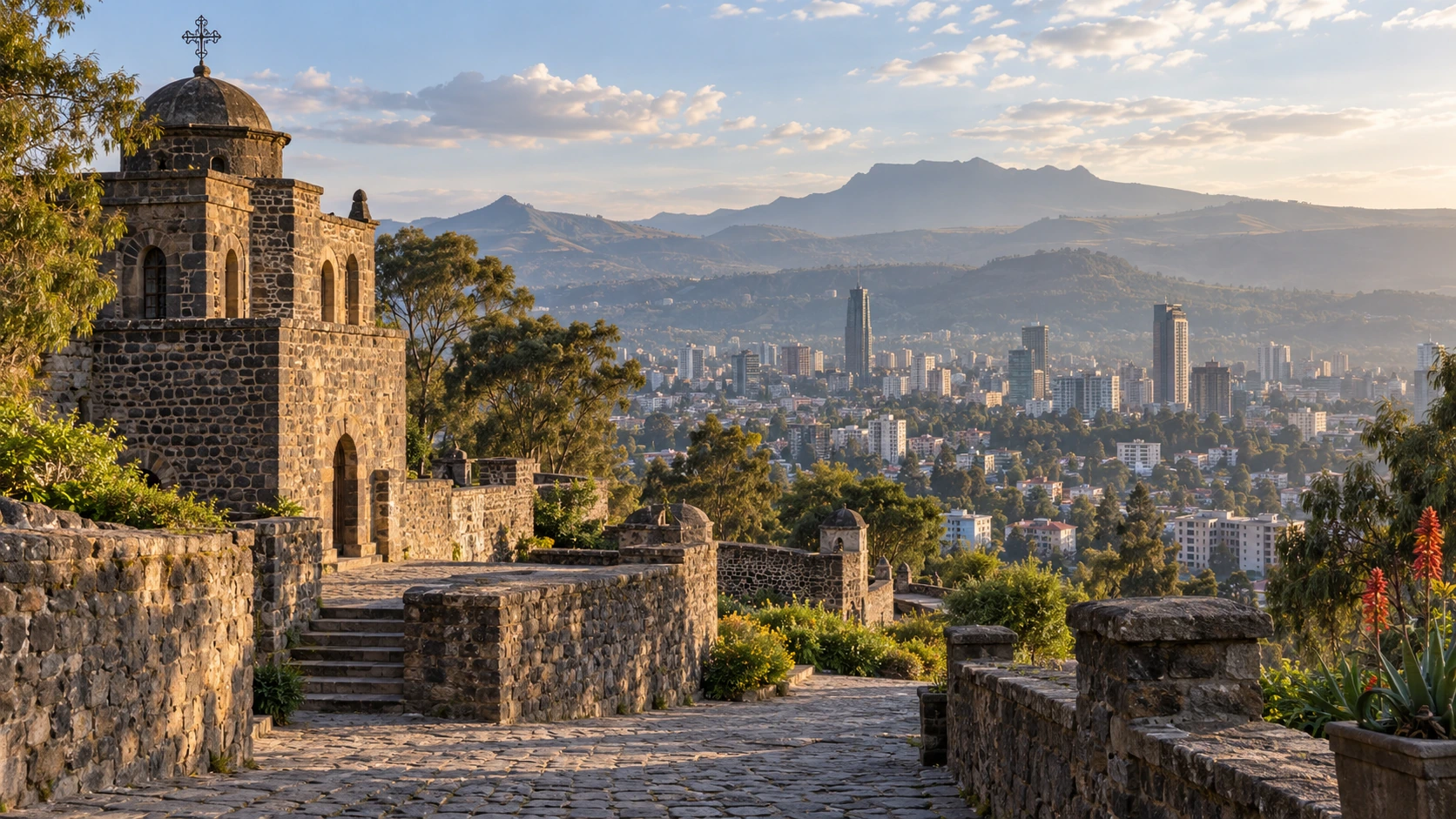
Editorial destination illustrations are used in this guide.